
"Fraijanes Plateau"
200 article(s) found
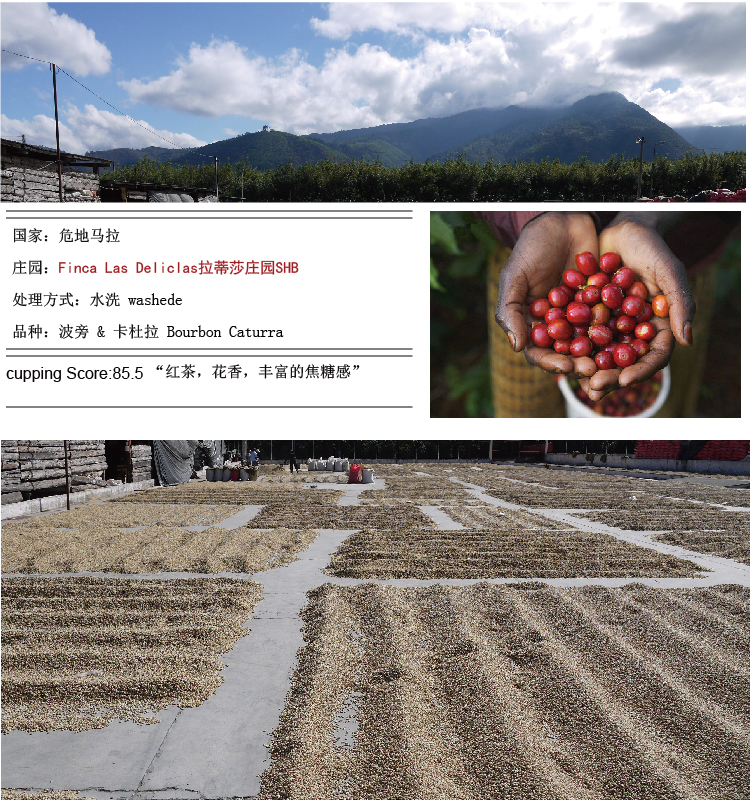
How to choose coffee and raw beans by hand? Choose the right raw coffee beans? Raw beans from Guardia La Tisa Manor
What kind of raw beans are high-quality raw beans? First look at the surface of beans, fresh and high-quality raw beans, the surface is shiny, in addition, the processing of good raw beans, uniform color, the surface of uneven color can not be called good beans, must choose uniform color. Secondly, the particle size is the same, which is also evidence of good quality management. Make sure that the particle size is the same when you buy it.

Guatemala Ladisha taste fragrant Guatemalan coffee types and prices
For the exchange of professional baristas, please follow the LaTisha of Guatemala made by hand in the coffee workshop (Wechat official account cafe_style). 15g powder, medium grinding (small Fuji ghost tooth cutter 4 grinding), v60 filter cup, 88-89 degrees water temperature, the first water injection 30g water, 27 seconds of steaming, injection to 105g water cut off, wait for the powder bed water to half and then water injection, slow water injection until 225g water

Ladisha Manor single bean flavor description, cooking suggestion manor introduces planting history information
Professional baristas Please pay attention to the Coffee Workshop (Wechat official account cafe_style) Coffee was really introduced to Guatemala in 1750 by Father Jesuit, and the coffee industry was developed by German colonists at the end of the 19th century. Today, most of the coffee industry's production takes place in the south of the country. Guatemala has seven main coffee producing areas: Antigua and Cobain

Flavor characteristics of Fleghis Coffee producing area in Guatemala. Introduction to Farrakhan Nice Plain Coffee producing area
For more information on coffee beans, please follow the Coffee Workshop (official Wechat account cafe_style) the Republic of Guatemala, commonly known as Guatemala, is located in Central America, bordered by the Pacific Ocean to the west, the Caribbean Sea to the east, Mexico to the north, Belize to the northeast, Honduras and El Salvador to the southeast. Guatemala is located in Central America, its northern lowland plain Peteng

Characteristics of Coffee in eight producing areas of Guatemala
Guatemala is a famous producer of high-quality Arabica coffee in Central America. Coffee from five volcanic and three non-volcanic producing areas is very unique and enjoys a high reputation in the international market.

Guatemala Coffee Bean roasting Latisa Manor Coffee varieties and Coffee practices
Main points: see that some friends say to buy coffee powder directly, I personally recommend people in large and medium-sized cities, it is better to buy fresh coffee beans and grind them themselves. To make a good cup of coffee, the most fundamental thing is to have fresh and high-quality coffee beans; hand mill to buy better, can ensure that the coffee powder is uniform. If the powder is not evenly ground, the coffee will not taste good.
Fine Coffee producing areas of Guatemala Coffee characteristics Jane
Mr. Eduardo Ambrocio of the Guatemalan Coffee Company introduced Guatemalan coffee to the audience at the SCAA Houston show in April 2010. Thanks to Ambrocio for giving samples of coffee from eight major producing areas in Guatemala. Eight major coffee producing areas in Guatemala. Acatenango Valley: Acatenango Valley is high above sea level

Raminita Group's Flower God Coffee Antigua's top boutique coffee flavor introduction
Today, most of the coffee industry's production takes place in the south of the country. Guatemala has seven main coffee producing areas: Antigua (Antigua), Cobain (Coban), Lake Attilan (Atitlan), Vevetnango (Huehuetenango), Farahan Plateau (Fraijanes), Oriente (Oliente) and San Marco (San Mareos). Each region has its own climate change.
Guatemala Fine Coffee beans at Latisha Manor in the Rahan Plateau
Coffee was really introduced into Guatemala in 1750 by Father Jesuit, where the coffee industry was developed by German colonists at the end of the 19th century. Today, most of the coffee industry's production takes place in the south of the country. There are seven main coffee producing areas in Guatemala: Antigua, Coban, Atitlan and Huehuete.
Boutique Coffee at La Tisa Manor in the Farahan Plateau of Guatemala
Coffee was really introduced into Guatemala in 1750 by Father Jesuit, where the coffee industry was developed by German colonists at the end of the 19th century. Today, most of the coffee industry's production takes place in the south of the country. There are seven main coffee producing areas in Guatemala: Antigua, Coban, Atitlan and Huehuete.
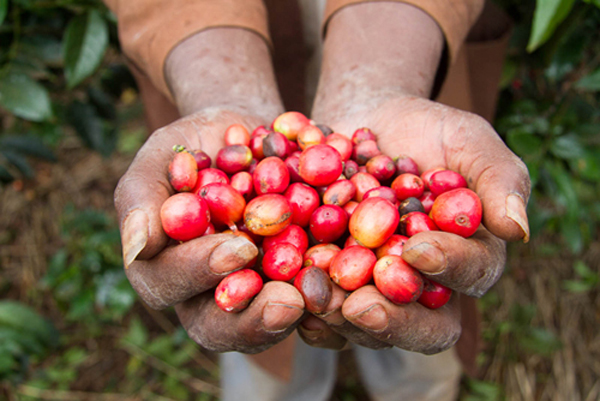
A detailed introduction to the characteristics of coffee from eight major producing areas of Guatemala
Eight major coffee producing areas in Guatemala. Acatenango Valley: the Acatenango Valley is 2000 meters (6500 feet) above sea level, with dense shade and unique ecology. Nearby Fuego volcanoes continue to erupt, making its coarse, sandy soil rich in a variety of minerals. Temperate sea breezes from the Pacific and seasonal

Black tea flowers flavor La Tisa Manor in the Farahan Plateau of Guatemala
Coffee was really introduced into Guatemala in 1750 by Father Jesuit, where the coffee industry was developed by German colonists at the end of the 19th century. Today, most of the coffee industry's production takes place in the south of the country. There are seven main coffee producing areas in Guatemala: Antigua, Coban, Atitlan and Huehuete.

American Coffee Coffee production area World Coffee production area Guatemala Coffee production area Guatemala Frei Hane
The fifth coffee producing area of Guatemala is the Friehanes Plateau (FraijanesPlateau). The GuatemalawbrFraijanes Plateau of Guatemala is close to Antigua and similar to Antigua, it also has volcanic soil rich in pumice (pumice), extremely high elevations and active volcanoes. However, there are enough Rain Water,

Guatemala Republic Coffee beans Flower-scented Coke of La Tisa Manor on the Farahan Plateau of Guatemala
Coffee was really introduced into Guatemala in 1750 by Father Jesuit, where the coffee industry was developed by German colonists at the end of the 19th century. Today, most of the coffee industry's production takes place in the south of the country. There are seven main coffee producing areas in Guatemala: Antigua, Coban, Atitlan and Huehuete.

Introduction to the flavor and taste of Guatemala Coffee Manor
Volcanic soil, high altitude, humid and rainy climate, and active volcanic activity have created the unique geographical conditions of the Farahan Plateau. The Pacaya volcano in the region is the most active of the three still erupting volcanoes in Guatemala, leaving the Farahan Plateau often shrouded in a thin layer of dust and providing plenty of minerals for the soil of the Farahan Plateau. When the coffee beans are dried
Guatemala Coffee Bean Roast Latitha Manor
Coffee was really introduced into Guatemala in 1750 by Father Jesuit, where the coffee industry was developed by German colonists at the end of the 19th century. Today, most of the coffee industry's production takes place in the south of the country. There are seven main coffee producing areas in Guatemala: Antigua, Coban, Atitlan and Huehuete.
Boutique coffee Fraijanes,Guatemala City, a coffee-producing area in Guatemala
A cup of Antigua coffee in Guatemala seems to let us see the sudden disappearance of the mysterious Mayans multiply in the ancient land, history brushed away their existence, history has achieved their eternity. If a person's wrinkles depict a person's path, then the smell of coffee remembers the origin of a cup of coffee: about its hometown, harvest time, baking and research.
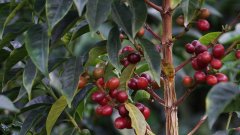
Guatemalan style Ladisha Manor Coffee Bourbon Kaddura High altitude Fine Coffee
Coffee was really introduced into Guatemala in 1750 by Father Jesuit, where the coffee industry was developed by German colonists at the end of the 19th century. Today, most of the coffee industry's production takes place in the south of the country. There are seven main coffee producing areas in Guatemala: Antigua, Coban, Atitlan and Huehuete.

Description of Flavor and introduction of Historical Story of Solar Coffee beans in Olian specialty area of Oriente, Guatemala
Professional coffee knowledge exchange more coffee bean information please follow the coffee workshop (Wechat official account cafe_style) Guatemalan coffee history Guatemala Guatemala coffee was introduced by missionaries in 1750. It was only in 1860 that the Germans expanded the entire industry. To date, there are about 60000 family farms operating in Guatemala

Guatemalan coffee beans with sun-exposed high-altitude volcanic soil
Lima coffee beans are mostly cultivated in the high-altitude volcanic area soil, which belongs to the most advanced Arabica variety. Due to the long ripening period, the beans are medium and dense (Guatemalan coffee beans are graded not on the basis of particle size, but on the basis of shortcomings), and the bean color is dark turquoise. It is characterized by the balance of fragrance, mellow and sweetness. Farahan Plateau